


Imagine stepping into your backyard, where the morning sun casts a golden glow over the trees, and the sweet symphony of birdsong fills the air. It's a tranquil scene that many of us cherish.
But as you stand there, you might wonder: can you feed these feathered friends? Are you helping them, or could you unintentionally harm them? These are questions that often flutter through the minds of nature lovers like yourself. Understanding how to best support our avian companions is crucial for their health and your enjoyment.
We'll explore the dos and don'ts of feeding birds, revealing surprising insights that will transform your backyard into a haven for birds. Keep reading to discover how you can make a positive impact on the lives of the creatures that bring joy to your day.

Credit: www.amazon.com
Choosing The Right Bird Feed
Birds can enjoy a variety of foods, but choosing the right bird feed is essential. Fresh seeds, nuts, and fruits provide the necessary nutrients. Avoid foods with artificial additives to keep your feathered friends healthy and happy.
Feeding birds can be a delightful activity, bringing you closer to nature and providing vital nourishment to our feathered friends. However, the choice of bird feed is crucial. Selecting the right food not only attracts a variety of birds to your backyard but also ensures their well-being. Let’s delve into how you can make informed choices about bird feed, focusing on types of seeds, nutritious options, and avoiding harmful ingredients.
Types Of Bird Seeds
Bird seeds come in various types, each catering to different bird species. Black oil sunflower seeds are a favorite among many birds, thanks to their high fat content and easy-to-crack shells. Millet is another excellent choice, especially for ground-feeding birds like sparrows and doves. A blend of seeds can attract a diverse group of birds. Consider using thistle seeds if you want to attract finches, or safflower seeds for cardinals. Mixing different types of seeds in your feeder can create a vibrant bird-watching experience in your backyard.
Nutritious Options
Ensuring that your bird feed is nutritious is key to supporting the health of your visiting birds. Look for seeds that offer high energy and essential nutrients. Peanuts, for instance, are an excellent source of protein and fat, perfect for the colder months. Suet cakes are another nutritious option. They provide birds with the fats and proteins needed to sustain their energy levels. Have you ever noticed how active birds become during winter? It's because they're burning energy to stay warm, and nutritious feed helps them do just that.
Avoiding Harmful Ingredients
Not all bird feeds are created equal, and some can even be harmful. Avoid seeds coated with pesticides or other chemicals, as these can be toxic to birds. Similarly, steer clear of feed mixes that contain artificial colors or flavors. Some ingredients can be deceptively dangerous. Bread or crackers, often thought of as safe, can actually be harmful. They offer little nutritional value and can swell in birds' stomachs, causing discomfort. Always opt for natural, clean options to keep your feathered visitors safe and healthy. Choosing the right bird feed is not just about attracting birds; it’s about nurturing them responsibly. What choices will you make to support your backyard wildlife? Your decisions can make a significant difference in the lives of these delightful creatures.
Safe Feeding Practices
Feeding birds can be a joyful activity, promoting biodiversity in your backyard. It's important to provide natural seeds and grains. Avoid giving processed foods as they can harm birds' health.
Feeding birds can be a delightful way to connect with nature, but it's essential to do it safely. Providing food in a way that is healthy for birds ensures they thrive without unintended harm. Safe feeding practices not only protect birds but also enhance your bird-watching experience.
Feeding Schedule Tips
Establishing a consistent feeding schedule helps birds rely on your feeding spot as a dependable food source. Aim to feed them at the same time each day, especially in the morning when they are most active. Have you ever noticed how birds start to gather when they sense food is coming? This routine can create a sense of trust and predictability. Avoid overfeeding, which can lead to spoiled food and attract pests. Offer just enough food for a day, keeping an eye on how much is left. This helps you adjust the amount accordingly. Consider seasonal changes—birds may need more energy in colder months.
Proper Feeding Locations
Choosing the right location for feeding is crucial for bird safety. Place feeders in spots where birds can easily escape predators, like near trees or shrubs. This gives them a quick refuge and adds to their sense of security. Ensure the location is convenient for you to refill and clean. A spot visible from your window can turn your home into a mini bird observatory. Watch as they flutter in and out, bringing a bit of nature right to your doorstep.
Hygiene And Cleanliness
Maintaining cleanliness around your feeding area is vital to prevent disease. Clean feeders regularly with a mild bleach solution, rinsing thoroughly to avoid residue. This simple step can significantly reduce the risk of spreading illnesses among birds. Remove uneaten food and debris from the ground beneath feeders. This keeps the area tidy and prevents attracting unwanted pests like rodents. Have you ever thought about how a clean environment could affect bird health? Your efforts in cleanliness directly impact their well-being. By following these safe feeding practices, you create a nurturing environment for birds that benefits both them and you. As you continue this rewarding activity, consider how your actions can have a positive effect on these beautiful creatures.
Understanding Bird Species Needs
Feeding birds requires understanding their dietary needs. Seeds, fruits, and insects cater to different species. Proper food ensures healthy bird populations and ecosystem balance.
Understanding the needs of different bird species is essential for anyone interested in feeding birds. Birds are not one-size-fits-all when it comes to nutrition. Each species has its own preferences and requirements. Knowing what birds frequent your area and what they need can make your backyard a haven for feathered friends.
Identifying Local Birds
Start by observing the birds that visit your area. Do you notice sparrows, finches, or maybe the occasional cardinal? Each species has unique feeding habits. A simple guidebook or birding app can help you identify them. Engage your curiosity—what unique patterns or colors can you spot? Keep a journal of your observations. What time do they arrive? Are they alone or in groups? These details can be fascinating and helpful.
Seasonal Feeding Needs
Birds' needs change with the seasons. In winter, food is scarce, and they might appreciate high-energy foods like suet or sunflower seeds. Spring brings nesting season. Birds seek protein-rich foods to support growing families. Consider offering mealworms or peanuts. Summer and fall might require different strategies. Think about how your offerings can support migration or the molting process.
Special Diets For Specific Species
Some birds have special dietary needs. Hummingbirds thrive on nectar, not seeds. Setting up a feeder with sugar water can attract them to your yard. Woodpeckers enjoy insects and fruits. You might add an apple or orange to your feeding station. Observe your feathered visitors. Are they interested in the food you provide? Adjusting your offerings can make a big difference.
Feeding birds is more than just tossing out breadcrumbs. It's an opportunity to understand and support the wildlife around you. What new bird will you discover today?

Credit: www.cornellpress.cornell.edu
Using Bird Feeders Effectively
Feeding birds with feeders can create a lively garden and support local wildlife. Choosing the right seeds and placing feeders strategically attracts diverse bird species. Regular cleaning keeps feeders safe and welcoming for birds.
Using bird feeders is a delightful way to invite a variety of bird species into your backyard. But, are you using them effectively? Understanding the different types of bird feeders and the best practices for their placement, safety, and maintenance can make a significant difference in attracting more birds and keeping them safe. Let's dive into how you can maximize the benefits of bird feeders.
Types Of Bird Feeders
Choosing the right bird feeder can attract different types of birds to your garden. Tube feeders are fantastic for small birds like finches and chickadees. Platform feeders can accommodate a wider range of bird species, including larger ones like cardinals. Suet feeders are perfect for attracting woodpeckers and nuthatches, especially during the colder months. Knowing which birds you want to attract will help you choose the appropriate feeder. Consider mixing different types to see which ones your local birds prefer.
Placement And Safety
Where you place your bird feeders can make all the difference. Position feeders away from windows to prevent birds from accidentally flying into the glass. I remember placing a feeder too close to my kitchen window, only to constantly hear alarming thuds. Hang feeders in a sheltered spot to protect birds from harsh weather and predators. Ensure there's a clear line of sight for birds to spot approaching threats. Keeping feeders about five feet from the ground can deter ground predators like cats.
Maintenance And Upkeep
Regular maintenance of bird feeders is crucial for the health of the visiting birds. Clean feeders every two weeks to prevent the spread of disease. Use a mild soap and rinse thoroughly. Check for moldy or clumped seeds, which can be harmful if ingested by birds. Replace them with fresh seeds regularly. Consistent upkeep also ensures that your feeders remain attractive and functional, keeping your feathered friends coming back for more. Are there any bird feeder mistakes you might be making? By adjusting your approach with these practical tips, you can create a welcoming haven for birds while enjoying their company and songs.
Avoiding Predators And Pests
Feeding birds can be enjoyable, but it's important to protect them from predators and pests. Offering food in safe, elevated locations reduces risks. Regularly cleaning feeders helps keep pests away.
Feeding birds is a delightful activity that brings a bit of nature's charm right to your backyard. However, it's not just the birds that are attracted to your feeders. Predators and pests can also take an interest, potentially causing harm to your feathered friends or creating a nuisance. Let's explore some practical strategies to keep your bird feeding station safe and enjoyable.
Deterring Squirrels
Squirrels are notorious for raiding bird feeders. These agile creatures can leap great distances and are clever at finding ways to access bird food. Using squirrel-proof feeders with weight-sensitive perches can help keep them at bay. Another effective method is to place feeders away from trees and structures that squirrels can use to jump from. Greasing feeder poles with a bit of petroleum jelly can also act as a deterrent, making it difficult for squirrels to climb.
Protecting From Larger Predators
Larger predators like hawks can pose a threat to small birds. To offer some protection, place feeders near bushes or trees that provide quick cover for birds. You might also consider using netting or wire cages around feeders to allow only smaller birds access. If hawks become a regular presence, try repositioning your feeders or offering food at different times to disrupt their hunting patterns. Creating a safe feeding environment can make your backyard a haven for birds.
Dealing With Invasive Species
Invasive species like starlings or house sparrows can dominate feeders, leaving little for other birds. Offering food that these species don't prefer, such as safflower seeds, can reduce their visits. You can also use feeders designed for specific birds, like tube feeders with small perches for finches. Monitoring and adjusting your feeding strategy will help maintain a balanced bird population at your feeders. By taking these steps, you can enjoy the beauty of birds while minimizing unwanted visitors. What creative solutions have you used to protect your backyard birds?
Recognizing Signs Of Unhealthy Birds
Birds with drooping wings or dull eyes may be unwell. Feeding them the right food is crucial. Pay attention to their eating habits. Proper nutrition helps maintain their health.
Recognizing signs of unhealthy birds is crucial for bird enthusiasts. Birds, like any living creature, can experience health problems. Understanding these signs helps ensure their wellbeing. Healthy birds are vibrant and active. An unhealthy bird may show subtle signs of distress. Observing these signs early can make a difference in their recovery. Let's explore some key indicators of bird health issues.
Common Bird Health Issues
Birds face several health challenges that can affect their wellbeing. Feather loss, swelling, or unusual droppings are common issues. Respiratory problems may cause wheezing or coughing. Eye infections can lead to redness or discharge. Digestive issues might result in diarrhea. These symptoms often indicate underlying health problems. Identifying them early can help in seeking appropriate care.
Observing Behavior Changes
Behavior changes in birds often signal health concerns. A healthy bird is lively and curious. If a bird is lethargic or less vocal, it may be unwell. Loss of appetite is another sign of distress. Watch for excessive sleeping or hiding. Changes in flying patterns can be significant too. These behaviors hint at possible health issues. Regular observation helps in identifying these changes promptly.
Responding To Sick Birds
Quick response is vital when a bird shows signs of illness. Isolation can prevent the spread of disease to other birds. Provide a warm, quiet environment for the sick bird. Consult a veterinarian for professional advice. Medication might be necessary, as prescribed. Ensure the bird has easy access to food and water. Monitor its condition closely for any improvement. Early intervention can improve recovery chances.
Creating A Bird-friendly Environment
Creating a bird-friendly environment invites feathered friends to your space. Feed them seeds, fruits, and nuts. Fresh water and safe shelter create a welcoming place.
Creating a bird-friendly environment is not just about scattering seeds. It's about creating a sanctuary where birds can thrive naturally. Whether you live in a bustling city or a serene countryside, enhancing your outdoor space for birds can bring joy and contribute to biodiversity. Imagine waking up to the cheerful chirping of birds as they flit around your garden—it's a small change with big rewards. Let's dive into some practical ways you can transform your space into a haven for our feathered friends.
Incorporating Water Sources
Birds need water just like we do. Installing a bird bath or a small pond can make a big difference. It doesn't have to be fancy; a simple basin filled with fresh water can attract a variety of birds. Keep the water clean and change it regularly to avoid algae. In winter, consider a heated bird bath to prevent freezing. You might be surprised how many birds stop by for a sip or a splash!
Providing Shelter And Nesting Areas
Think about where birds can rest and raise their young. Birdhouses and nesting boxes are great options. Place them in quiet, sheltered spots away from predators. You can also let parts of your garden grow wild. Dense shrubs and trees provide natural shelter. Birds need safe spaces, and your garden can offer just that.
Planting Native Vegetation
Choose plants that are native to your area. These plants offer the best nutrition and shelter for local birds. Native flowers, shrubs, and trees can attract insects, which are a vital food source for many birds. Mixing a variety of plants can create a lively ecosystem. You could plant a few berry bushes or seed-producing flowers. Every choice you make contributes to a healthier environment for birds. Creating a bird-friendly environment is rewarding in ways you might not expect. It's not just about the birds; it's about making your surroundings more vibrant and connected to nature. Are you ready to turn your garden into a bird paradise?
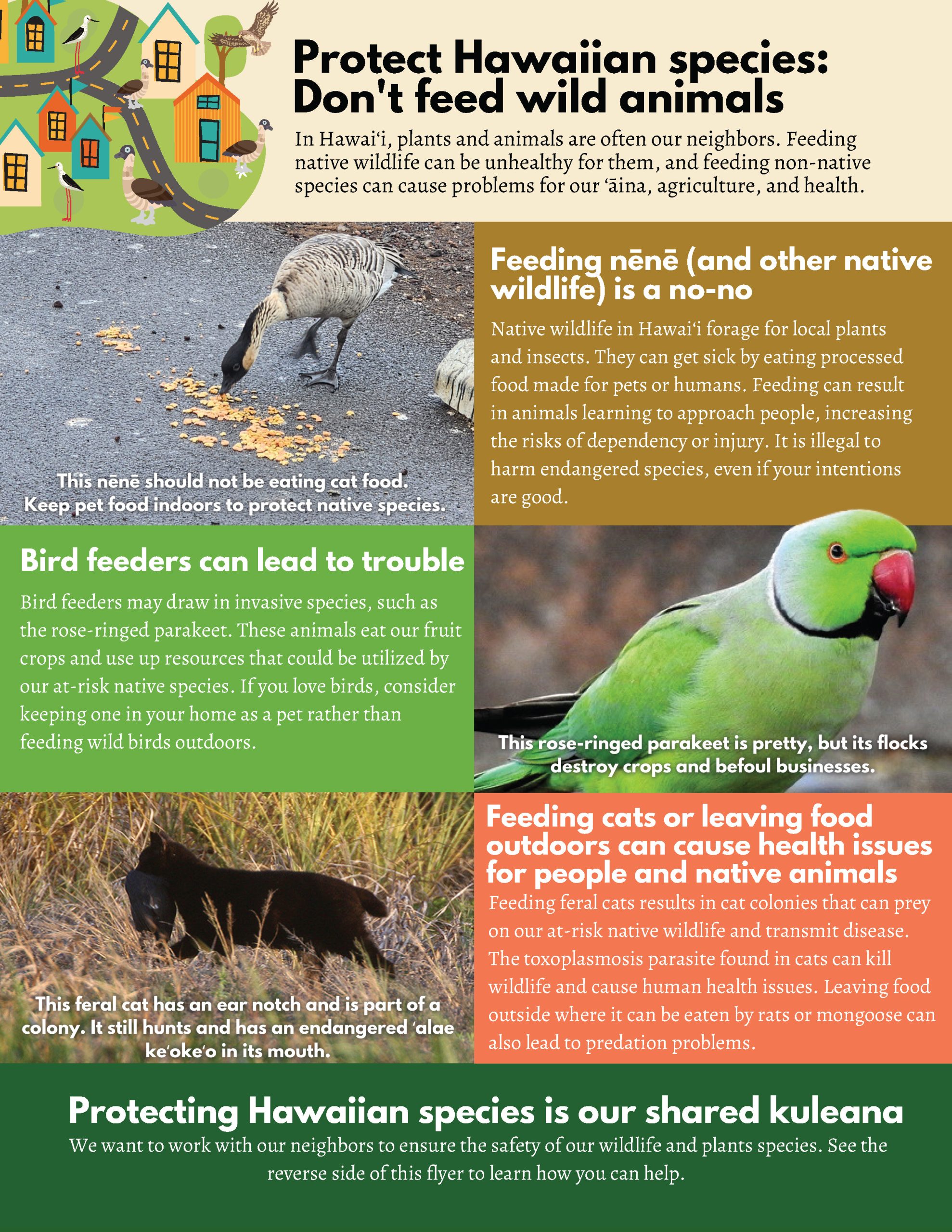
Credit: dlnr.hawaii.gov
Frequently Asked Questions
Can We Feed Birds In Our Backyard?
Yes, feeding birds in your backyard is generally safe and beneficial. It provides essential nutrients during food shortages. Use bird feeders with seeds, suet, or nectar, depending on the species. Ensure cleanliness to prevent diseases. Check local guidelines, as feeding practices might vary based on regional wildlife policies.
What Food Is Safe For Birds To Eat?
Birds can safely eat seeds, nuts, fruits, and suet. Different species have specific preferences. For example, finches love sunflower seeds, while hummingbirds prefer sugar water. Avoid offering bread, as it lacks nutrition. Ensure water is available, especially during dry seasons.
Always research specific dietary needs for your local bird species.
How Does Feeding Impact Bird Migration?
Feeding can influence bird migration by providing additional resources. It may encourage birds to linger longer in areas. However, it generally doesn't disrupt their natural migration patterns. Birds rely on instinct and environmental cues. Ensure feeders are stocked before migration seasons to help birds build energy reserves.
Is It Okay To Feed Birds Year-round?
Yes, feeding birds year-round is generally beneficial. During winter, it provides essential nutrients when natural food is scarce. In spring, it supports breeding and nesting. Summer feeding helps fledglings grow. Keep feeders clean to prevent mold and bacteria. Adjust feeding practices based on seasonal needs and local wildlife recommendations.
Conclusion
Feeding birds can be a delightful experience. It strengthens our connection with nature. Birds benefit from extra food, especially in harsh weather. Always choose the right food for them. Avoid bread and processed items. Clean feeders regularly to prevent disease.
Water is equally important for birds. Fresh and clean water helps them stay healthy. Remember to be mindful of local wildlife laws. Respect their natural habits. Enjoy observing their beauty and behavior. Sharing your space with birds enriches life. Embrace these simple joys.