


Imagine stepping into your garden and witnessing a flurry of vibrant wings and cheerful chirps, all drawn to the simple yet effective allure of your bird feeder. A 150 N bird feeder, supported by three sturdy cables, is not just a functional piece for birdwatchers; it's a centerpiece that can transform your outdoor space into a lively sanctuary for feathered friends.
You might be wondering why the details of its support system matter. Well, they do, and here’s where it gets interesting. The way your bird feeder is supported can affect everything from its stability to the variety of birds it attracts.
You’ll want to keep reading to discover how the right setup can enhance both the safety and appeal of your bird feeder, ensuring a delightful experience for both you and the birds. Let's dive into the fascinating world of bird feeders and uncover how a well-supported setup can make all the difference.
Cable Selection
A 150 N bird feeder hangs securely with three cables. Choosing the right cables ensures stability and safety. Proper selection involves considering cable strength, material, and attachment points.
Choosing the right cables for your 150 N bird feeder is crucial. Your selection impacts stability, durability, and the overall aesthetic of your feeder setup. Let's dive into the specifics of cable selection, considering both material choices and weight capacity.
Material Choices
When selecting cables, consider materials that offer both strength and flexibility. Stainless steel is popular due to its corrosion resistance, essential for outdoor setups. Galvanized steel is another option—it's strong and more affordable, but less resistant to rust. You might also explore synthetic options like nylon-coated cables. They're weather-resistant and provide a sleek finish, enhancing the visual appeal of your feeder. Which material aligns with your priorities?
Weight Capacity
Understanding weight capacity is crucial for ensuring the cables can safely support the bird feeder. A 150 N weight might seem light, but consider other forces like wind and bird activity. Manufacturers often provide weight ratings for cables, giving you a clear guide on what each can handle. Opt for cables with a higher weight capacity than your feeder's weight to accommodate additional forces. Have you considered what happens if the cables fail? Choosing cables with the right weight capacity prevents accidents and ensures your feeder remains secure. Incorporating these insights into your cable selection not only ensures functionality but also enhances your feeder's longevity. Your choice reflects your commitment to a safe and appealing bird-watching experience.
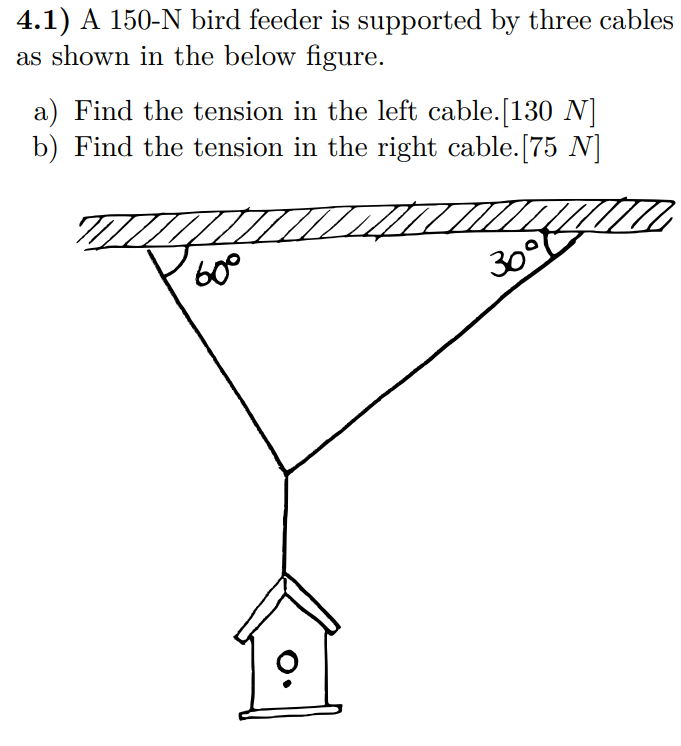
Credit: www.chegg.com
Positioning The Feeder
Positioning the feeder requires careful attention to cable support for stability. Three cables hold a 150 N bird feeder securely. Adjusting cable tension ensures balance and prevents tilting.
Positioning the Feeder is a crucial step in creating a welcoming environment for your feathered friends. A well-placed feeder can attract a variety of birds, offering you a chance to observe their colorful antics. But how do you ensure your feeder is perfectly positioned? Let's dive into some practical considerations that will help you make the most of your bird-watching experience.
Choosing The Location
Your bird feeder's location can significantly impact how many birds visit. Ideally, you want to choose a spot that is visible from your favorite window, so you can enjoy the view. Consider placing it near natural shelters like trees or shrubs. These provide birds with a sense of security, allowing them to quickly escape if threatened. Avoid areas prone to strong winds or excessive sun exposure. Too much wind can make the feeder sway, causing birds to stay away. Excessive sunlight can lead to the seed overheating or spoiling faster.
Height Considerations
The height at which you hang your feeder is equally important. Hanging it too low might invite unwelcome guests like squirrels, while too high can deter birds from visiting. A height of about five to six feet off the ground is typically ideal. This height makes it harder for predators to reach the feeder but still accessible for birds. Consider your safety and convenience when refilling the feeder. Ensure it's at a height that is easy for you to access without the need for ladders or stepping stools. This ensures you can maintain the feeder regularly without hassle. Have you noticed birds preferring feeders hung at different heights? Experiment with varying heights to see what works best in your garden. You might discover that some birds prefer higher placements while others are comfortable with lower feeders.
Cable Attachment Techniques
Securing a 150 N bird feeder with cables requires careful techniques. Ensuring stability and durability is crucial. Proper attachment methods can prevent accidents and prolong the feeder's life. Understanding how to effectively attach cables is essential for a safe setup.
Knot Types
Choosing the right knot is vital for cable security. Simple knots like the square knot are easy and effective. They provide a strong hold without slipping. For more security, consider a bowline knot. It creates a fixed loop that won't tighten under pressure. These knots ensure that the bird feeder stays securely in place.
Securing The Ends
After choosing the right knot, focus on securing cable ends. Use cable clamps for a tight grip. They prevent fraying and slipping. Make sure to apply the clamps correctly. Double-check the tension and adjust as needed. This step guarantees the feeder remains stable and reliable.
Credit: www.coursehero.com
Balancing Load Distribution
A bird feeder weighing 150 N hangs securely from three cables. These cables work together to balance the load evenly. This setup ensures stability and safety, preventing the feeder from tipping or falling.
Balancing load distribution is crucial when setting up a bird feeder supported by cables. This ensures that the feeder remains stable and safe for birds, preventing any mishaps. A well-balanced setup can also prolong the life of your feeder, reducing wear and tear on the cables. But how do you achieve this balance?
Equal Tension Strategy
To ensure each cable supports the feeder equally, you should aim for equal tension. Think of it like holding a grocery bag with three handles; you want each handle to bear the same weight. Start by measuring the length of each cable. Adjust them so that they are of equal length. This helps distribute the load evenly. Consider using a simple tension gauge to check the tension. It’s a small investment that can make a big difference in stability.
Adjusting For Stability
Stability is key for a feeder that hangs outdoors. Uneven weight distribution can lead to swaying, scaring birds away. Adjusting for stability means you need to account for changes in the environment. Wind can affect the feeder's balance. Check the tension regularly and adjust accordingly. An easy way is to look for signs of wear on the cables and make adjustments. Ask yourself: is your feeder swaying too much? If it is, it's time to tighten those cables. This simple check can save you a lot of trouble in the future. If you've ever struggled with a bird feeder that seemed to always lean to one side, you know the frustration. Balancing load distribution is not just about stability; it’s about creating an inviting space for birds. Would you enjoy dining at a table that wobbles? Neither do birds. By focusing on equal tension and stability adjustments, you can ensure your bird feeder is both welcoming and durable. Keep these principles in mind, and you’ll be rewarded with a lively, feathered crowd.
Weather And Environmental Factors
A 150 N bird feeder hangs supported by three cables. Each cable must handle environmental factors like wind and rain. Proper cable placement ensures stability and safety for birds visiting the feeder.
When setting up a bird feeder, it's crucial to consider how weather and environmental factors can impact its performance and longevity. A 150 N bird feeder supported by three cables must withstand various elements to continue attracting our feathered friends. Whether you're in a region with harsh winters or sweltering summers, understanding these factors can help you maintain a bird-friendly environment.
Durability In Different Climates
The climate in your area plays a vital role in the durability of your bird feeder. In regions with heavy snowfall, the weight can strain the cables, so it's wise to use stronger materials like stainless steel. Meanwhile, in areas with intense sun exposure, UV-resistant materials can prevent fading and deterioration. Humidity and rain can also affect the feeder's structure. Moisture can lead to rust or weaken materials over time. Regularly inspecting and possibly treating your feeder with weatherproof coatings can prolong its life.
Preventing Damage From Elements
Wind can be a relentless enemy of bird feeders. Strong gusts may cause cables to fray or even snap, leading to potential falls. To mitigate this, consider anchoring the cables securely and checking them for wear and tear frequently. Bird feeders can also become breeding grounds for unwanted mold and bacteria after rain. Ensure proper drainage to keep the seed dry and replace any wet seed immediately. This simple act can prevent sickness in visiting birds. Have you ever noticed how some feeders seem to last longer than others? Often, it's the attention to environmental details that makes the difference. By anticipating weather-related challenges, you can ensure your bird feeder remains a safe haven for birds year-round.
Regular Maintenance
Maintaining a bird feeder supported by cables is essential for safety. Regular checks ensure stability and longevity. Proper maintenance helps attract more birds. It also reduces the risk of damage. This section explores key maintenance areas.
Inspecting Cables
Examine cables for any signs of wear. Look for fraying or rust. These issues can compromise the feeder's support. Replace damaged cables promptly. Ensure cables are tight and secure. Loose cables may lead to instability. Regular inspections prevent accidents.
Checking Fasteners
Fasteners play a crucial role in stability. Check for loose or missing fasteners. Tighten them to ensure the feeder is secure. Use the right tools for the job. Replace any worn-out fasteners immediately. This ensures the feeder remains safe and functional.
Safety Precautions
Installing a bird feeder supported by three cables can be an exciting way to attract various bird species to your yard. However, ensuring safety is crucial. Without proper precautions, your bird feeder could become a hazard. By taking the right steps, you can enjoy watching your feathered friends in a safe environment.
Ensuring Secure Installation
Start by choosing a sturdy location for your feeder. A solid structure like a tree or a beam will provide ample support. Ensure each cable is tightly secured to prevent any wobbling.
When attaching the cables, double-check the knots. Loose knots can lead to a feeder collapse. Consider using cable clips for added security.
Think about weather conditions. Wind and rain can affect the feeder's stability. Regularly inspect the cables for wear and tear. Replace them if needed to maintain safety.
Avoiding Overloading
Be mindful of the weight your bird feeder can handle. A 150 N feeder should not be overloaded with too much birdseed. This can stress the cables and lead to breakage.
Consider the type of birds visiting your feeder. Large birds may add extra weight. Adjust the seed quantity accordingly to prevent overloading.
Have you noticed more birds visiting your feeder than anticipated? Regularly assess the feeder's load to ensure it remains within safe limits. This simple check can prevent accidents and keep the birds safe.
Safety precautions are essential when setting up your bird feeder. By ensuring secure installation and avoiding overloading, you create a safe haven for birds, and peace of mind for yourself. Enjoy the beauty of nature, knowing you've taken steps to protect both the birds and your property.

Credit: www.youtube.com
Frequently Asked Questions
How Do The Cables Support A Bird Feeder?
The cables distribute the feeder's weight evenly, ensuring stability. Each cable shares the load, holding the 150 N bird feeder securely. This setup prevents tilting and ensures the feeder remains balanced and safe from falling.
What Materials Are Best For Feeder Cables?
Steel and nylon are excellent choices for cables. Steel is strong and durable, while nylon is flexible and weather-resistant. Both materials ensure longevity and safety, providing a reliable support system for the bird feeder.
Why Use Three Cables For Support?
Using three cables offers balanced support and stability. It distributes the feeder's weight evenly across all points. This setup minimizes the risk of the feeder tilting or falling, ensuring a secure and stable installation.
How To Ensure Cables Are Correctly Installed?
Ensure each cable is equally tensioned and securely fastened. Check for any signs of wear or damage. Regularly inspect and adjust the cables to maintain proper alignment and tension, ensuring the feeder remains stable and secure.
Conclusion
A 150 N bird feeder supported by three cables offers stability. This setup ensures the feeder hangs securely. Birds can enjoy a safe feeding spot. The cables distribute weight evenly. This prevents strain on any single cable. It's important to check cables regularly.
This keeps the feeder secure and safe. Regular maintenance ensures long-lasting use. Choosing quality materials for cables matters. They withstand weather and weight better. This approach enhances your birdwatching experience. The feeder stays in place, providing joy for birds. And for those who love watching them.