


How Can I Attract Birds to My New Bird Feeder?
Imagine waking up to the delightful chorus of chirping birds right outside your window. Sounds wonderful, doesn't it?
If you've recently set up a bird feeder, you might be eagerly waiting for your feathered friends to arrive. But perhaps you're wondering, "How can I attract birds to my new bird feeder? " You're not alone. Many bird enthusiasts find themselves in this exact situation.
The good news is that you can transform your garden into a bustling hub of avian activity with just a few simple tweaks. This article will guide you through some tried-and-true methods to make your bird feeder irresistible to birds. From choosing the right seeds to creating a safe and welcoming environment, you'll discover tips that appeal not only to your logical mind but also tug at your desire for a peaceful, nature-filled sanctuary. Ready to bring the magic of birdsong to your doorstep? Let's dive in and explore how you can make it happen.
Credit: www.perkypet.com
Choosing The Right Bird Feeder
Choosing the right bird feeder can attract a variety of birds. Different birds have different preferences. Understanding these preferences can enhance your bird-watching experience. A well-chosen feeder can also make your backyard a haven for birds.
Types Of Feeders
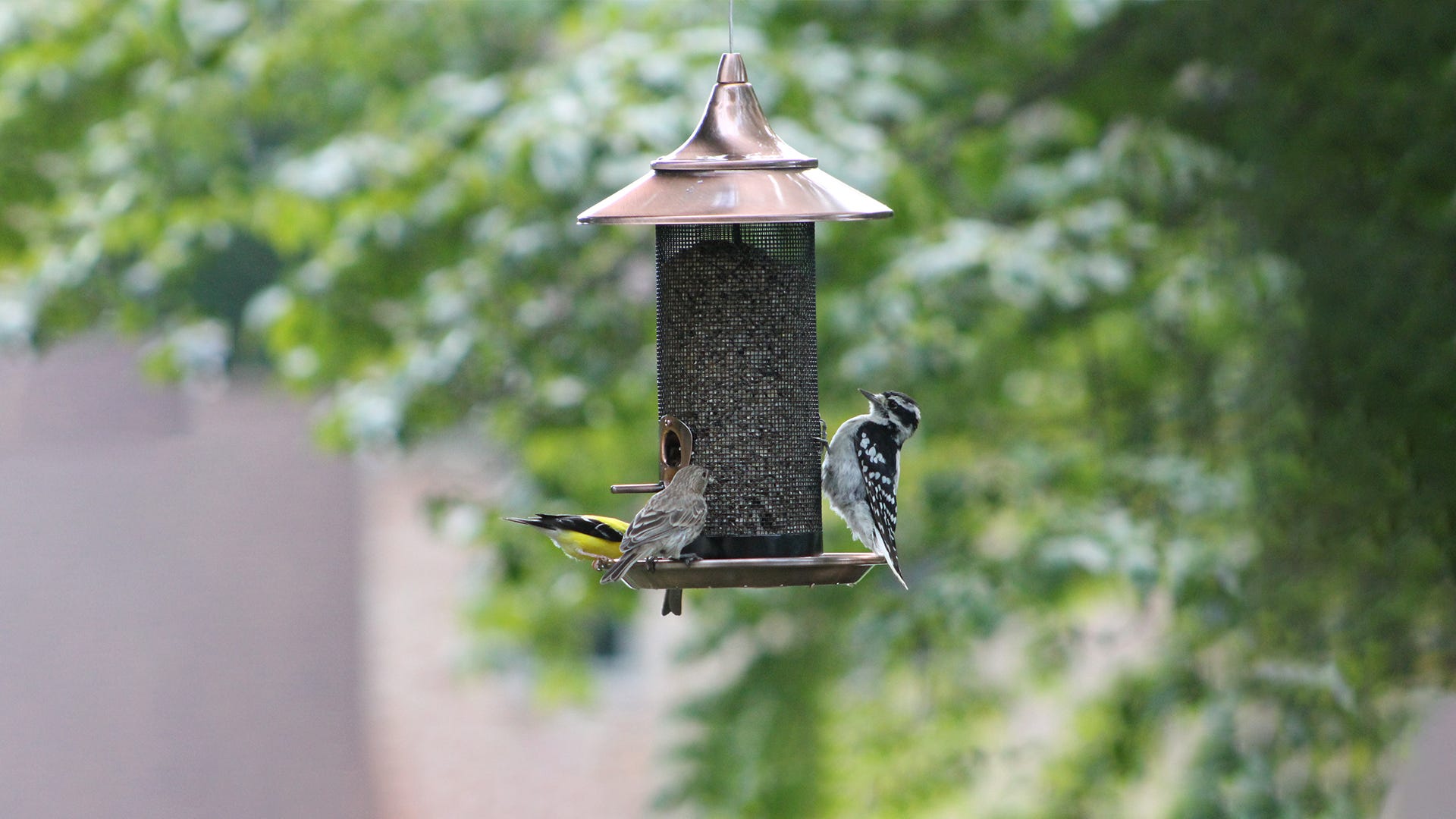
Various types of bird feeders exist. Tube feeders are great for small birds like finches. Hopper feeders can attract larger birds like cardinals. Suet feeders are perfect for woodpeckers and nuthatches. Platform feeders offer a versatile option. They welcome many bird species.
Material Considerations
The material of your feeder matters. Plastic feeders are lightweight and affordable. They may not last long in harsh weather. Metal feeders are durable and can withstand the elements. Wooden feeders offer a natural look. Ensure they are treated to resist rot.
Placement And Accessibility
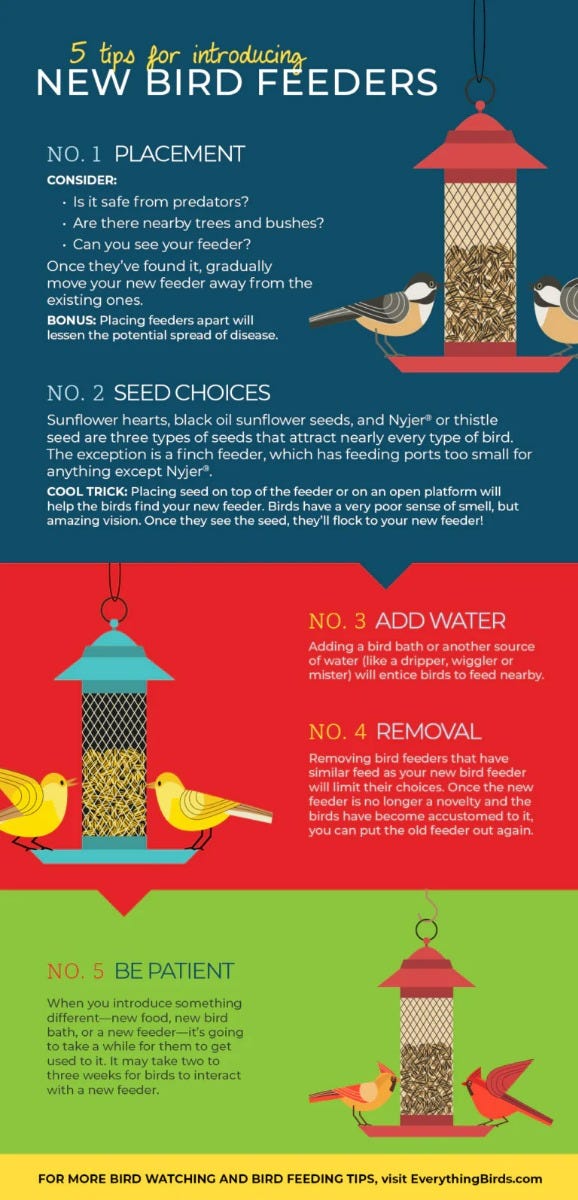
Where you place your feeder is crucial. Hang it away from predators like cats. Ensure it's visible to birds flying by. Keep feeders close to shelter like trees or shrubs. This gives birds a safe place to retreat. Make sure it's easy to refill and clean.

Credit: nathanwoelfeloutdoors.com
Selecting Bird-friendly Food
Choosing the right seeds attracts birds to your feeder. Black oil sunflower seeds are popular among many species. Adding suet provides essential fats for energy, especially in colder months.
Attracting birds to your new bird feeder requires selecting the right food. Birds are choosy eaters and prefer certain types of seeds and grains. Offering a variety of food can help draw more species. This guide will help you choose bird-friendly food that suits your feathered visitors.
Seed Varieties
Different birds prefer different seeds. Sunflower seeds are popular among many bird species. They have a high energy content and are easy to eat. Black oil sunflower seeds are especially favored for their thin shells. Millet is another good option, loved by smaller birds. It is inexpensive and provides excellent nutrition. Mix your seed types to attract a variety of birds.
Seasonal Food Options
Birds have changing needs through the seasons. In winter, high-energy foods help birds survive the cold. Suet and peanuts are great choices during this time. During spring, birds need protein for nesting. Offer mealworms and insects to meet their needs. Summer calls for hydrating options like fruits. Chopped apples and berries work well. Adjust your offerings as the seasons change.
Avoiding Harmful Ingredients
Some ingredients can harm birds. Bread is often fed to birds but is not nutritious. It can lead to malnutrition. Salt is another dangerous substance. Birds cannot process it and it causes health issues. Also, avoid artificial colors and flavors. Always choose natural and safe options for your bird feeder.
Creating A Bird-friendly Environment
Attracting birds to your new feeder can be simple. Choose a variety of seeds to appeal to different species. Place the feeder near trees or shrubs to provide shelter and safety. Keep the feeder clean and filled regularly to maintain interest.
Enjoy watching birds visit your garden.
Creating a bird-friendly environment is crucial if you want to turn your backyard into a haven for feathered friends. Birds are drawn to spaces that meet their basic needs—food, water, shelter, and safety. By tailoring your space to these needs, you’ll not only attract them to your new bird feeder but also encourage them to return time and time again. Growing up, I had a bird feeder that always seemed empty. It wasn't until I made a few changes that the birds started flocking. Let’s explore how you can do the same.
Providing Fresh Water
Water is essential for birds, and a simple birdbath can make a world of difference. Make sure to keep it clean and filled with fresh water daily. A shallow dish works just fine—birds need just enough to bathe and drink comfortably. Consider adding a small fountain to keep the water moving. The sound of trickling water is a magnet for birds. Plus, moving water stays cleaner longer, reducing your maintenance work.
Incorporating Native Plants
Native plants are like a buffet for local birds, offering them food and shelter. They attract insects that birds love to eat and provide seeds and berries. Research what plants are native to your area and add a few to your garden. My neighbor's yard is always filled with birds, and her secret is simple: native plants. The birds have everything they need, and her garden thrives because of it. Why not take a leaf out of her book?
Ensuring Safety From Predators
Birds need to feel safe, especially when feeding. Place your bird feeder in a location that offers some cover, like near bushes or trees, but not so close that predators can hide. Keep a good distance from any potential lurking spots for cats or other animals. A friend lost his bird visitors because of a neighborhood cat. He added a few thorny bushes around the feeder area, and the birds returned. How can you create a safer space for your feathered guests? Creating a bird-friendly environment isn’t just about making your yard look pretty; it's about meeting the needs of the birds. With a few thoughtful choices, you can enjoy the beauty and songs of birds right outside your window. What will you change in your garden today to welcome them?
Credit: www.perkypet.com
Maintaining Your Bird Feeder
Bright colors and fresh seeds can attract more birds to your feeder. Clean it regularly to keep birds healthy. Placing it near trees or bushes gives birds a safe spot to rest.
Welcoming birds to your new feeder is a delightful experience, but maintaining it is crucial to keep them coming back. Birds are choosy and sensitive creatures. They rely on you to provide a clean and safe feeding environment. Neglecting your feeder can result in moldy food and unhappy visitors. Let's dive into ways to keep your feeder in top shape.
Cleaning Techniques
A dirty bird feeder is like a restaurant with filthy tables—unappealing. Regular cleaning is vital to prevent buildup and contamination. Use a solution of warm water and vinegar to scrub the feeder thoroughly. Rinse it well to ensure no residue is left. Think about how you feel when you see a dirty coffee mug. Birds are no different; they prefer clean feeding areas. Commit to a cleaning routine every two weeks for the best results.
Preventing Mold And Bacteria
Imagine serving food from a moldy fridge—unthinkable, right? Mold and bacteria can quickly invade your bird feeder, especially in damp conditions. To counter this, place your feeder in a dry, sunny spot. This minimizes moisture buildup. If you notice clumps of wet food, it's time for a change. Keep an eye on weather changes and adjust food accordingly. Fresh food equals happy birds.
Regular Food Supply
Consistency is key to attracting feathered friends. Birds are creatures of habit. They will flock to your feeder if they know it's stocked with their favorite seeds. Use a mix of sunflower seeds, peanuts, and suet to cater to various species. Picture this: You visit a favorite café only to find it closed. Frustrating, right? Similarly, an empty feeder will deter birds from visiting. Check your feeder daily to ensure it's well-stocked. By focusing on cleaning techniques, preventing mold, and ensuring a regular food supply, you create a bird-friendly haven. Which maintenance tip do you find most challenging? Let’s keep the conversation going in the comments.
Understanding Bird Behavior
Knowing bird behavior helps in attracting them to your feeder. Birds have unique habits and patterns. Observing these can provide insight into how to draw them in. They respond to food, safety, and environment. Each bird species has distinct preferences. Understanding these can make your bird feeder a popular spot.
Recognizing Local Species
Identify which birds live in your area. Different species have varied food choices. Some prefer seeds; others like fruits or insects. Find out what your local birds eat. Provide what they love, and they'll visit often. Creating a bird-friendly habitat helps too. Ensure your feeder is accessible and safe.
Bird Watching Tips
Bird watching is both fun and educational. It involves patience and attention to detail. Observe birds from a distance. Use binoculars for a closer look. Take note of their feeding times and habits. This can help you adjust your feeder and food supply. Make bird watching a regular activity to see more behavior patterns.
Recording And Sharing Observations
Keep a journal of your bird observations. Note the species, time, and weather conditions. Record any unique behaviors or interactions. Share your findings with local bird clubs or online forums. This can help others attract birds too. It also contributes to citizen science initiatives.
Common Challenges And Solutions
Attracting birds to a new feeder can be tricky. Ensure your feeder is visible and filled with fresh seeds. Adding a water source nearby can also entice birds.
Attracting birds to your new bird feeder can be a delightful experience, but it's not without its challenges. Common issues like pests, weather conditions, and feeder damage can make this hobby a bit tricky. However, with practical solutions, you can create a welcoming environment for your feathered friends while addressing these obstacles effectively.
Dealing With Unwanted Pests
Unwanted pests like squirrels and raccoons can be a real nuisance. They tend to raid feeders, leaving little for the birds. Installing a squirrel baffle can help deter these crafty critters. It's a simple device that attaches to your feeder pole, making it difficult for squirrels to climb. Another tactic is to use feeders designed specifically to prevent pest access. These feeders often have weight-sensitive perches that close off access when heavier animals try to feed.
Handling Weather Conditions
Weather can affect how many birds visit your feeder. Rain can make birdseed soggy, while snow might bury it altogether. Consider using weatherproof feeders. These are designed to shield seeds from rain and snow, keeping them dry and accessible. Additionally, placing your feeder in a sheltered area can provide some protection from harsh weather. Look for spots under trees or eaves that offer natural cover.
Addressing Bird Feeder Damage
Bird feeders can sometimes get damaged, especially if they're exposed to harsh weather or persistent pests. This can limit their effectiveness in attracting birds. Regular maintenance is key. Check your feeders weekly for any signs of wear and tear. Simple fixes can often prevent bigger problems down the road. If your feeder is beyond repair, consider investing in a sturdier model. Choose one made of durable materials like metal or heavy-duty plastic. Have you ever faced challenges with your bird feeder? How did you overcome them? Sharing experiences can help others find solutions too.
Frequently Asked Questions
How Do I Choose The Right Bird Feeder?
Selecting a bird feeder depends on the birds you want to attract. Tube feeders work well for small birds, while platform feeders attract larger species. Consider the feeder's material and ensure it's easy to clean. A weather-resistant feeder will last longer and provide a safe feeding environment.
What Type Of Birdseed Is Best To Use?
Black-oil sunflower seeds are popular for attracting a variety of birds. They are rich in energy and easy to eat. For specific birds, try using specialized mixes. For instance, nyjer seeds attract finches. Always ensure the seeds are fresh and free of mold to keep birds healthy.
Where Should I Place My Bird Feeder?
Position your bird feeder in a quiet, safe location. It should be away from predators and harsh weather. Ideally, place it near natural cover like shrubs or trees. This setup provides birds with shelter and a sense of security while they feed.
How Can I Keep Squirrels Away From My Feeder?
Use squirrel-proof feeders or baffles to deter these crafty critters. Position the feeder away from jumping points like trees or fences. Consider adding spicy birdseed, as birds are unaffected by spice, but squirrels dislike it. Regularly check and adjust your setup to ensure it's effective.
Conclusion
Attracting birds to your feeder can be rewarding and simple. Choose a variety of seeds for different birds. Keep the feeder clean to prevent disease. Place it in a safe spot, away from predators. Add water nearby to create a complete habitat.
Be patient; birds may take time to visit. Enjoy watching them once they come. Their presence adds beauty to any garden. With these tips, your bird feeder will soon become a lively spot. Remember, small efforts lead to delightful bird sightings.
Happy birdwatching!