


Have you ever watched a bird meticulously gather twigs and leaves to construct a nest and wondered, "Is this something they learned, or is it instinctual?" You're not alone.
Many bird enthusiasts and curious minds are intrigued by the mysteries of nest building. Is it a skill passed down from generation to generation, or is it an innate behavior coded in their DNA? We’ll unravel the fascinating world of avian architecture and delve into the science behind whether nest building in birds is a learned behavior.
By understanding these intricate processes, you can deepen your appreciation for the natural world and the marvels of animal behavior. So, let’s explore the captivating question: are birds born builders, or do they learn along the way? Keep reading, and you might just find the answer more surprising than you think.
Bird Nesting Instincts
Birds are fascinating creatures, known for their intricate nesting behavior. Nest building is crucial for survival and nurturing the next generation. But is this behavior driven by instinct or learned over time? Understanding bird nesting instincts offers insight into nature's complexities. Explore how instincts guide birds in creating their homes.
Bird Nesting Instincts: The Basics
Birds have an innate urge to build nests. This instinct kicks in during breeding season. They seek out suitable sites and materials. Instincts guide them in choosing safe locations. This ensures protection from predators and harsh weather.
Materials Selection: A Guided Process
Birds don't randomly pick nesting materials. Instincts influence their choices. Soft materials provide comfort. Sturdy materials offer structure and support. Birds know what works best for their species.
Location And Safety: Instinct-driven Decisions
Nesting location is vital for success. Birds instinctively choose spots that offer safety. They avoid high-risk areas. Dense foliage or high branches often serve as ideal sites. Instincts help them find the perfect balance between access and security.
Construction Techniques: Skill Born From Instinct
Nest building involves unique techniques. Birds weave twigs and leaves with precision. These skills are not taught but instinctual. Some species use saliva or mud for added stability. Each action is guided by innate knowledge.
Role Of Genetics In Nest Building
Birds are fascinating creatures with a variety of behaviors. One such behavior is nest building. Understanding whether this is a learned behavior or influenced by genetics can provide insight into avian life. Genetics play a crucial role in many animal behaviors. Birds are no exception. Scientists believe genetics influence their nest-building skills. But how much of this behavior is innate?
Genetics significantly affect how birds build nests. Each bird species has a unique nest style. These styles often remain consistent over generations. This suggests a strong genetic component. A bird's DNA might dictate the shape and structure of its nest. This is why many birds of the same species build similar nests.
Species-specific Nest Designs
Different bird species have distinct nest designs. This is not random. Genetic coding guides these designs. For example, weaver birds create intricate woven nests. Their genetic makeup influences this skill. Similarly, the simple nests of doves follow a genetic pattern. The nest design is often not taught, but inherited.
Instinctual Nest Building
Many birds build nests without prior experience. Young birds often construct nests on their first attempt. They do this without watching others. This instinctual behavior points to genetics. It suggests that nest-building skills are hardwired in their brains. This genetic influence ensures the survival of the species.
Adaptation And Natural Selection
Genetics allow birds to adapt their nest-building techniques. Over time, natural selection refines these skills. Birds with better nesting skills often have higher survival rates. Their genes are passed to future generations. This process helps species adapt to changing environments. It ensures the continued success of effective nest-building strategies.
Research And Observations
Studies on birds in controlled environments provide insights. Scientists observe birds building nests without external influence. These studies highlight the role of genetics. Observations show that nest-building techniques remain consistent. This consistency across different habitats suggests a genetic basis.
Influence Of Environment On Nest Construction
The environment plays a big role in how birds build nests. Birds adapt their nesting habits based on the world around them. They choose materials and locations that suit their surroundings. This section explores how different environmental factors influence nest construction.
Availability Of Materials
Birds use materials they find nearby. Twigs, leaves, and grass are common choices. If a bird lives near water, it might use mud or reeds. Urban birds often use string or paper. The environment dictates what materials are easy to find.
Weather Conditions
Weather changes how birds build nests. In colder areas, nests are thicker for warmth. In hot climates, nests are airy to stay cool. Birds adjust their building methods to suit the weather.
Predator Presence
Safety from predators affects nest design. Birds might build higher nests if there are ground predators. If flying predators are common, nests may be hidden in dense foliage. Birds use their surroundings to keep their nests safe.
Human Impact
Human activity changes bird nesting habits. Birds might use man-made structures for nests. Pollution can also affect the choice of materials. Birds adapt to urban environments by modifying their nesting strategies.
Credit: ltl.org.uk
Observations In Young Birds
Observing young birds offers insights into their nest-building behaviors. Do they learn it, or is it instinctual? Studies show mixed evidence. Young birds display a mix of innate skills and learned behaviors. Watching their development helps understand these nesting patterns. Let's delve deeper into how young birds learn to build nests.
Parental Influence On Nesting
Parents play a key role in teaching young birds. They show how to select materials. The choice of location also matters. Young birds watch closely. They learn from their parents' decisions. This guidance is crucial for survival. It helps young birds understand their environment. Parental teaching shapes their future nesting habits.
Learning Through Observation
Observation is a powerful learning tool for birds. Young birds watch experienced birds build nests. They notice the techniques used. This includes how to weave twigs and leaves. They also learn about securing the nest. This process involves trial and error. Over time, skills improve. Young birds become proficient builders. Observation aids in developing these essential skills.
Experimental Studies On Nest Building
Scientists have long been fascinated by how birds build nests. Understanding if this skill is learned or innate is crucial. They have conducted several experimental studies to uncover the mystery. These studies provide insights into birds' nest-building behaviors.
Controlled Experiments
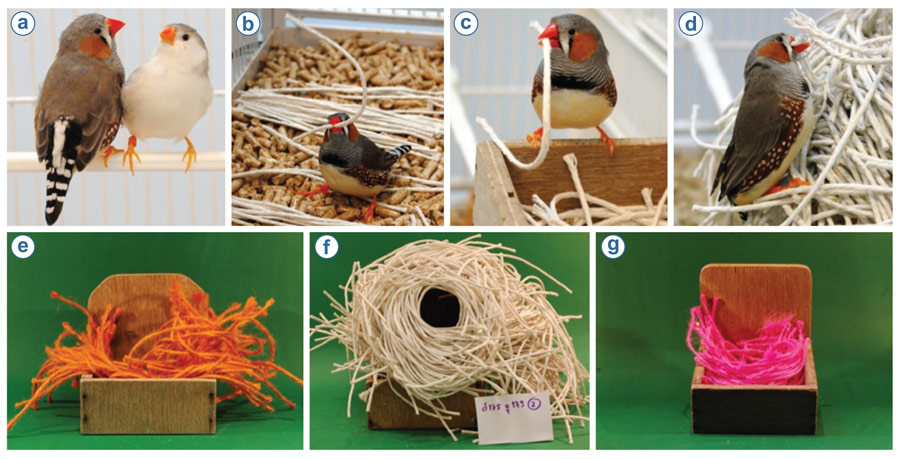
Researchers designed controlled experiments to observe birds in various settings. In these experiments, young birds were isolated from older, experienced ones. This approach helped scientists understand if nest-building skills develop without external influences.
In some cases, birds were provided with different materials. The aim was to see if they could adapt to new resources. Scientists carefully documented each bird's approach to building its nest. These experiments offered a unique glimpse into their problem-solving abilities.
Findings On Learned Behaviors
The findings revealed interesting patterns in bird behavior. Some birds showed improved nest-building skills over time. This suggests a learning component in their behavior. Young birds often mimicked older ones when observed together later.
Birds also displayed adaptability in material selection. They sometimes preferred materials similar to those used by their parents. This preference hints at a learned aspect of nest building. The studies also noted variations in nest complexity among species.
These findings have sparked more questions about bird intelligence. They challenge the notion that nest building is entirely instinctual. The research continues to evolve as scientists seek more answers.
Case Studies Of Specific Bird Species
Exploring bird nest building reveals insights into whether it's a learned behavior. Some species show innate skills, while others learn from experience. Understanding these patterns helps clarify the complexities of avian life.
Nest building in birds is a fascinating behavior that has intrigued scientists and bird watchers alike. By studying specific bird species, you can uncover whether their nest-building skills are learned or instinctual. Let's dive into some interesting case studies of particular bird species and discover what makes their nesting habits unique.
Weaver Birds
Weaver birds are known for their incredible craftsmanship. These birds create intricate nests that hang like art pieces from trees. Watching them build is like witnessing a tiny architect at work. Ever tried creating something without instructions? Weaver birds don't have a manual but seem to know precisely how to weave strands of grass into complex structures. It's debated whether young weavers learn by watching adults or if they possess innate skills. Imagine being a young weaver bird. You see adults meticulously tying knots and weaving grass. Do you start mimicking them naturally? Or is there an instinct that guides your tiny beak to create the perfect nest?
Swallows And Sparrows
Swallows and sparrows are less about complexity and more about adaptability. Their nests can be found in various environments, from urban settings to rural landscapes. You might have seen swallows darting around, constructing mud nests under bridges or eaves. It's astonishing how they adapt to available materials. Their ability to use mud and saliva shows a mix of learning and instinct. Sparrows, on the other hand, opt for simpler nests, often made of twigs and leaves. They build in familiar places, like trees or shrubs. But what happens when their environment changes? Do they learn new techniques or stick to what they know? Consider your own experiences. Have you ever tried building or crafting something with limited resources? How did you adapt? This adaptability in birds raises questions about their learning capabilities. These case studies highlight a blend of instinct and potential learning. As you observe these birds, ask yourself: are they born with these skills, or do they learn by observing their environment? The answers might not be straightforward, but they certainly make the world of birds more captivating.
Comparison With Other Animal Behaviors
Birds' nest building shows similarities to other animal behaviors, like beavers constructing dams. This behavior isn't entirely instinctive; it's partially learned through observation and experience. Young birds often improve their skills by watching older birds.
The intriguing world of animal behaviors often leaves us pondering: how do different species develop their skills? When considering nest building in birds, it's fascinating to compare this behavior with other animals. Nest building is a complex task requiring precision and dedication, but is it learned or instinctive? By examining other creatures, you might find surprising insights that challenge your perspective on learning versus instinct.
Comparison With Mammals
Mammals, like birds, display a mix of learned and instinctive behaviors. Take beavers, for instance. They construct dams using sticks and mud, improving their technique over time. Could this adaptation be similar to how birds refine their nest-building skills? Think about how young mammals learn survival skills from their parents. Is this teaching similar to how birds might observe and learn from older generations? Your thoughts could redefine how you view the learning process in nature.
Comparison With Reptiles
Reptiles often rely heavily on instinct. For example, turtles instinctively know to head towards the sea immediately after hatching. But does this mean all reptiles lack learned behaviors? Consider the possibility that reptiles might learn in subtle ways. You might wonder if some birds exhibit more reptilian-like instincts, relying less on learning. Could this instinctual behavior have roots in evolutionary history?
Comparison With Insects
Insects are known for their fascinating instinctive behaviors. Think of ants constructing intricate colonies with precise division of labor. How does this compare to birds' nest-building abilities? Insects operate primarily on instinct, yet they display complex social structures. You might see parallels between insects and birds in how they organize and adapt their environments. Does this challenge the notion that learning is essential for complexity?
Comparison With Marine Life
Marine life, like dolphins, shows remarkable problem-solving skills. Dolphins use tools and exhibit playful behaviors, suggesting learning. How does this relate to birds and their nest-building? Consider the parallels between marine life and birds in terms of environmental adaptation. Might birds learn from their surroundings like dolphins do, enhancing their nest-building strategies over time? As you think about these comparisons, ask yourself: is learning a universal trait across species, or is it more nuanced? Understanding animal behaviors opens doors to appreciating the rich tapestry of life.
Credit: comparative-cognition-and-behavior-reviews.org
Debate Among Ornithologists
Ornithologists often debate the nature of nest building in birds. Is it an innate skill? Or a learned behavior? This question has fascinated scientists for years. Understanding the origin of this behavior can reveal much about bird intelligence. Some experts believe that birds inherit nest-building skills. Others argue that these skills develop through learning and experience.
Arguments For Innate Behavior
Many ornithologists argue that nest building is innate. They point to the uniformity in nests built by specific species. Birds of the same species build similar nests, regardless of their habitat. This suggests a genetic blueprint guides their actions. Young birds often construct nests without observing others. This behavior supports the theory of instinctual nest building.
Arguments For Learned Behavior
Other experts believe nest building is a learned skill. They highlight the variations in nest design within species. These variations suggest an element of learning and adaptation. Birds might learn from observing others in their environment. Experiences and environmental factors can influence their nest-building techniques. This suggests that learning plays a role in refining their skills.

Credit: www.wskg.org
Frequently Asked Questions
Do Birds Learn To Build Nests?
Birds learn nest-building through instinct and observation. Young birds often watch and mimic their parents. Experience and environmental factors also play a role. While many birds have innate building skills, they can adapt to new materials and conditions. This indicates a combination of learned behavior and instinct.
Can Nest Building Be Taught To Birds?
Nest building is largely instinctual, but birds can learn from experience. Observing other birds or adapting to new environments enhances their skills. While they are not "taught" in a human sense, birds refine their techniques over time. This combination of instinct and learning aids in successful nest construction.
Why Do Birds Build Nests Differently?
Birds build nests differently due to species-specific instincts and environmental factors. Habitat, available materials, and climate influence nest design. Some birds adapt their building techniques based on local resources. This diversity ensures optimal conditions for egg incubation and chick rearing, demonstrating both learned behavior and innate instinct.
Are Young Birds Taught To Build Nests?
Young birds aren't directly taught, but they learn by observing adults. Instinct guides initial efforts, while experience refines techniques. They mimic parents and adapt to their environment. This process ensures they develop the necessary skills for successful nest-building as they mature.
Conclusion
Birds amaze us with their nest-building skills. But is it learned? Studies suggest a mix of instinct and learning. Some birds improve nests over time. Others follow inherited designs. Environmental factors play a role too. Birds adapt their skills to habitats.
Nest building is complex. Not purely learned or instinctive. Understanding this helps us appreciate nature. It reveals the balance between instinct and learning. Birds show us how adaptability benefits survival. Each nest tells a story. A story of instinct, learning, and environment.
It’s a fascinating topic for bird enthusiasts. The mystery continues.